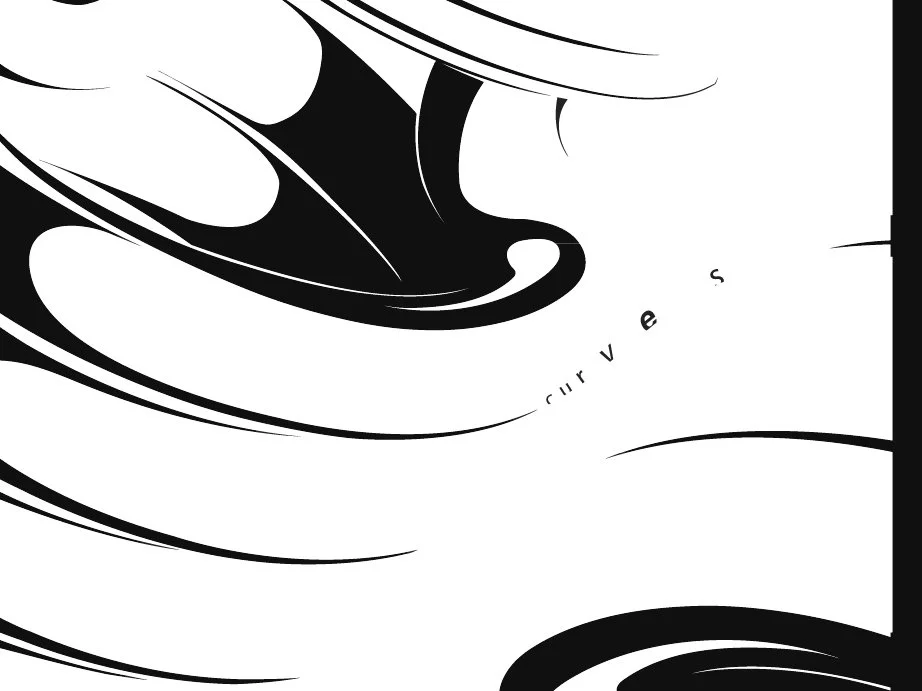
The design process began with rigorous geometric drafting and grid alignment to capture the underlying skeleton of the bulb. Utilizing reference photography and precise anchor-point placement, I mapped the twin-tube paths of the fluorescent glass spirals and the stepped tiers of the plastic ballast housing. By locking the artwork to a custom isometric or modular grid system, I ensured the complex, organic coil pattern was perfectly balanced by the heavy, symmetrical weight of the screw-in Edison base. This phase was entirely about structural integrity, creating a scalable blueprint where every mathematical curve, bèzier path, and junction felt deliberate and balanced.

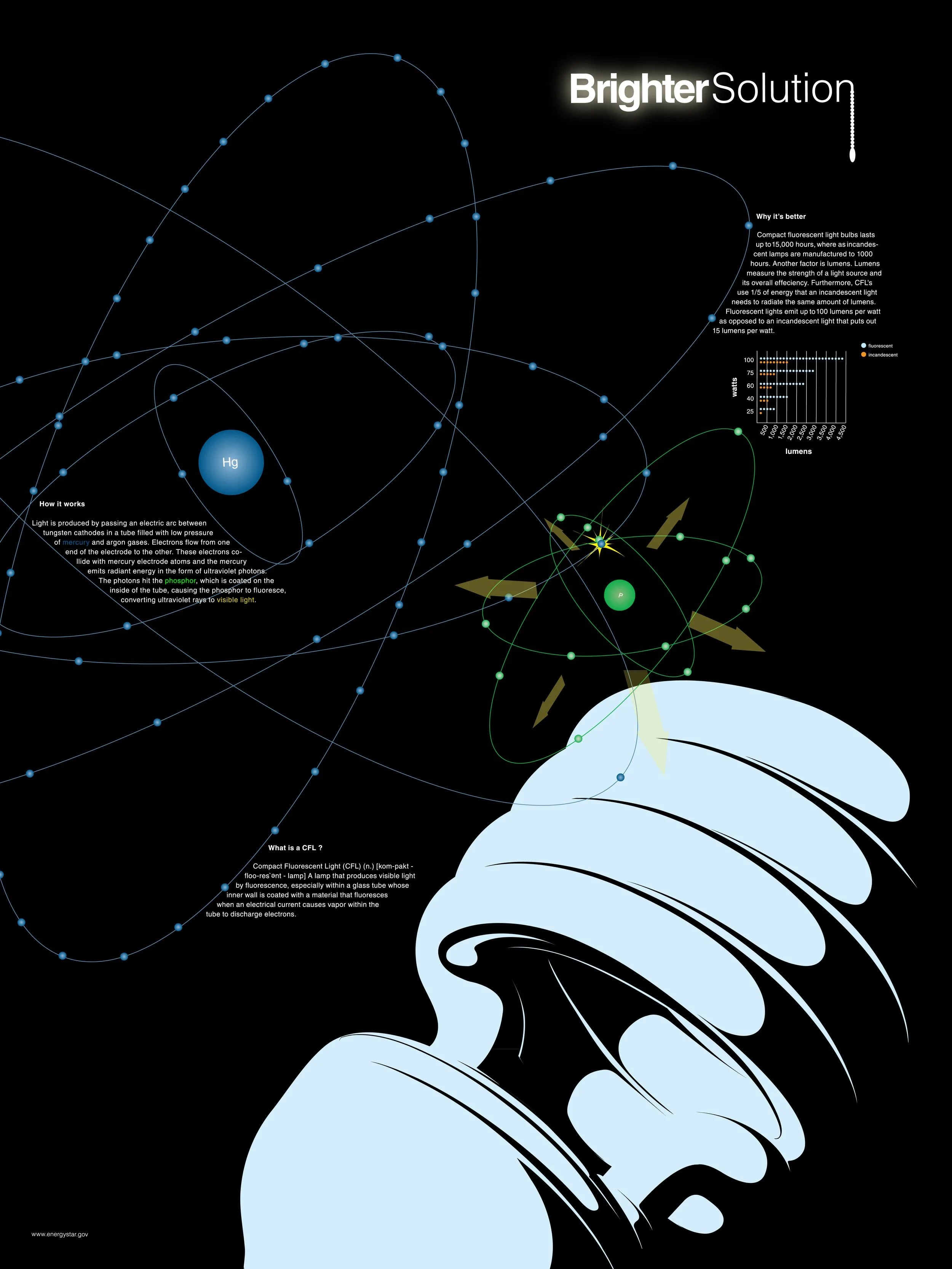

Moving from wireframe to final composition, the design philosophy focused heavily on visual economy, high-contrast values, and precise figure-ground relationships. I chose a striking, limited color palette, utilizing a stark duotone contrast to give the vector graphic a crisp, punchy edge optimized for modern digital screens. By completely omitting gradients, skeuomorphic textures, and intricate shadow details, the final graphic relies entirely on the deliberate interplay of positive and negative space, allowing the stylized silhouette alone to convey form, volume, and the immediate recognition of an illuminating light source.
This student project serves as a powerful portfolio demonstration of my ability to execute thorough form simplification, asset optimization, and flat design principles. Translating a complex, physical object into a scalable, responsive graphic asset showcases a deep understanding of visual hierarchy, geometric precision, and monoline weight consistency. The resulting vector mark is built for total cross-platform flexibility, functioning flawlessly as a small-scale, high-legibility digital favicon or as a bold, large-scale graphic element in a corporate identity or environmental signage system.
“CFL Project”
The objective of this academic case study was to dissect a complex industrial artifact—the compact fluorescent lamp (CFL)—and distill its intricate, spiraling geometry into a high-impact, reductive vector graphic. As an exercise in form simplification and gestalt principles, the core challenge lay in taming the overlapping curves of the glass tubing without losing the object's immediate semiotic identity. The goal was to transform a ubiquitous piece of household hardware into a striking visual asset that communicates efficiency and innovation at a glance, striking a perfect balance between mechanical accuracy and stark visual abstraction.